How to Reduce Churn Rate When Your Health Score Says Everything's Fine

If you're trying to reduce your SaaS churn rate, most advice covers the same ground: better onboarding, proactive check-ins, usage monitoring, tighter QBRs.
All worth doing.
But none of it explains the accounts that churn anyway, the ones with strong usage, happy QBRs, and a health score that never flagged a thing.
Those are usually the accounts a competitor got to first.
The Standard Advice for Reducing Churn (And Why It Falls Short)
Most churn reduction playbooks focus on signals that live inside your own product:
- Declining login frequency or feature usage
- Lower NPS or CSAT scores
- Support ticket volume or sentiment
- A champion going quiet or leaving the company
- Missed QBRs or delayed renewal conversations
These are real signals worth tracking. The problem is what they're built to catch: dissatisfaction that starts inside your relationship with the customer. They were never designed to catch a threat that starts outside it, a competitor reaching your customer directly with a better demo, better pricing, or a feature you don't have yet.
That threat doesn't show up in a login count. It shows up somewhere else entirely.
The Churn Your Health Score Can't See
A Real Example: The Cold Call That Changed Everything in 7 Days
One of our AEs shared this from his own experience as a buyer.
Last year, his company churned off a vendor and switched to that vendor's biggest competitor, two sales tech companies most people in the space would recognize.
The vendor hadn't done anything wrong. The team was genuinely happy with the product. But in a short window, the competitor's product got better, a lot better, and a cold call turned into a signed contract in a week.
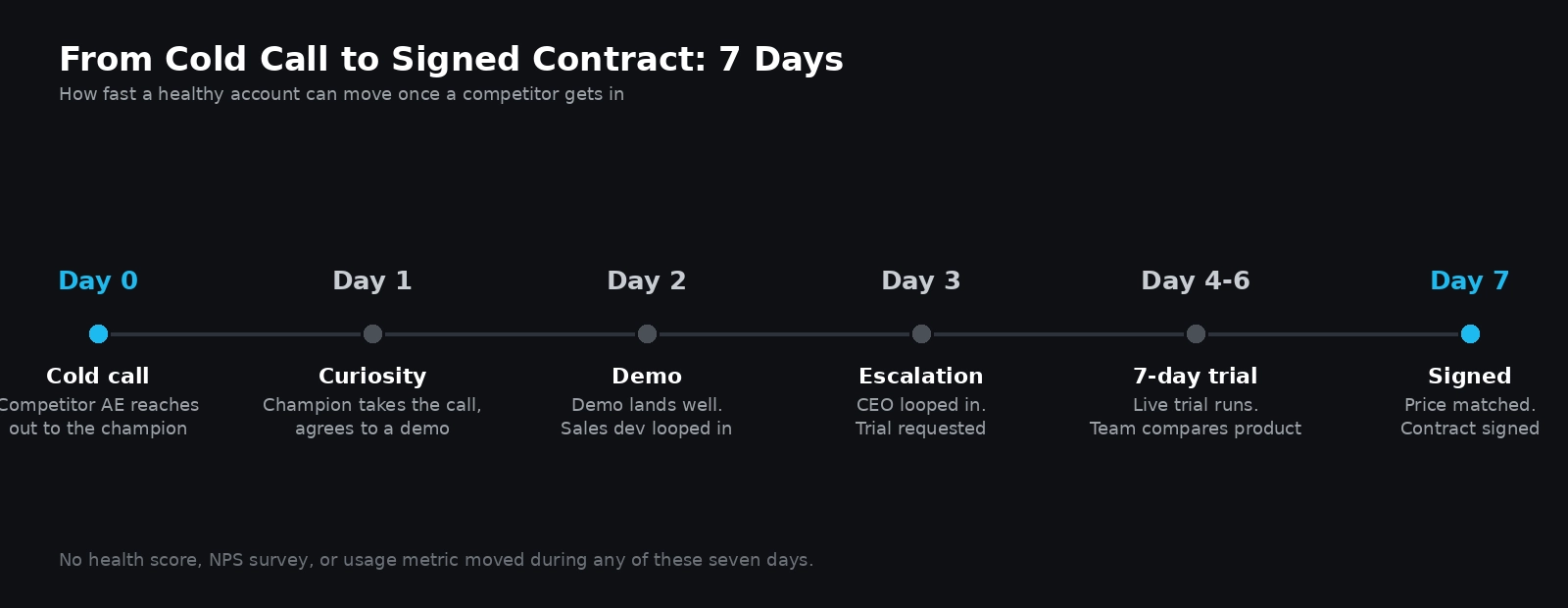
A real example of churn
No health score would have caught this. Usage hadn't dropped. NPS hadn't moved. The entire decision happened in a channel no CS or RevOps dashboard was watching.
This Isn't a One-Off
Across the pilots we've run, roughly one in three of these competitor signals turn out to be tied to an active evaluation, a far higher hit rate than most churn or intent signals produce.
This kind of activity is common. It's just invisible to the tools most CS and RevOps teams already use.
| Situation | Traditional Signal | External signal that actually moved | Outcome |
|---|---|---|---|
| Data infrastructure company, widespread pricing frustration in their category | Nothing internal changed, usage was stable | The customer account started showing signs of evaluating a competitor ahead of renewal | Early warning weeks before any cancellation conversation |
| Professional services software, an old closed-lost deal | No CRM activity, deal was marked dead | The account resurfaced, showing signs of an active evaluation with a competitor | Renewal window reopened before the incumbent noticed |
| Sales tech buyer (the AE story above) | QBRs were fine, no support tickets | A direct cold call and demo from the competitor's AE | Signed in 7 days |
Why Traditional Churn Signals Miss This
A competitor's AE reaching out to your champion doesn't touch your login data.
A competitor's renewal team working your account doesn't move your NPS.
A customer quietly taking a demo doesn't generate a support ticket.
The entire evaluation can happen, and often does, without a single internal signal moving.
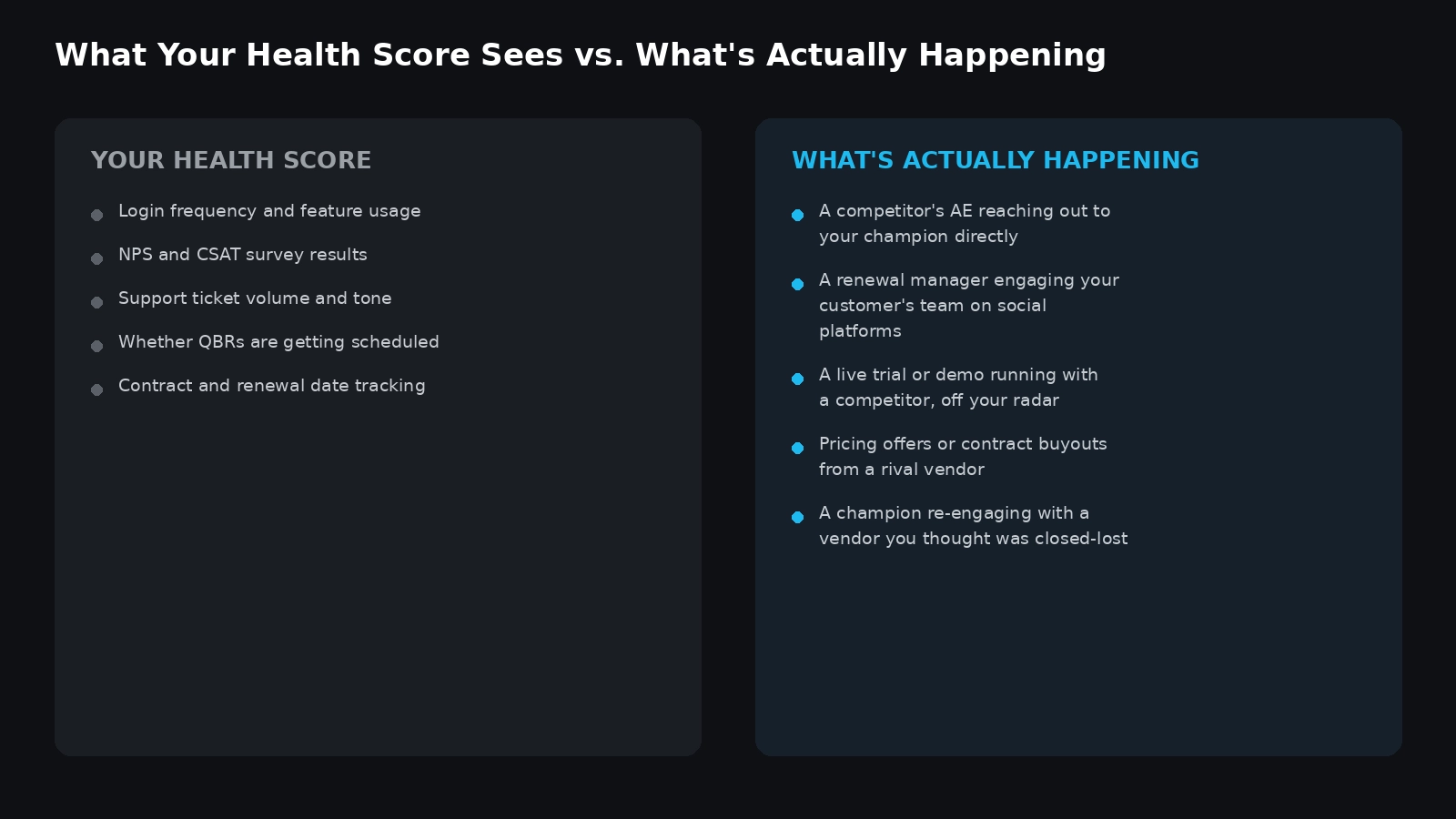
Health score vs reality in churn rate
How to Actually Reduce Churn From Competitive Displacement
- Track competitor activity on the account, not just usage. If competitive displacement is a real risk in your category, and it is in almost any category with more than one credible vendor, usage monitoring alone won't catch it. You need visibility into when a customer account is showing signs of evaluating a competitor, not just whether your customer is engaging with you.
- Build a real feedback loop between sales and CS. The moment a champion gets a cold call or a competitor's demo lands well, it often reaches someone on your team informally, a Slack message, a passing comment, long before it reaches CS. Closing that gap matters as much as any tooling decision.
- Watch for signs of a competitive evaluation, not just champion departures. Most CS teams already watch for a champion leaving. Far fewer watch for signs that the account is evaluating a competitor, even though that's frequently the earlier and more reliable signal. This is the pattern behind both anonymized examples above, and it often appears well before anything shows up in your CRM.
How to Automatically Reduce Churn Rate
This is the layer Letterdrop was built to add.
Rather than replacing your health score, it flags customer accounts likely evaluating a competitor, with a confidence score, so the risk shows up while there's still time to act, not in the loss call.
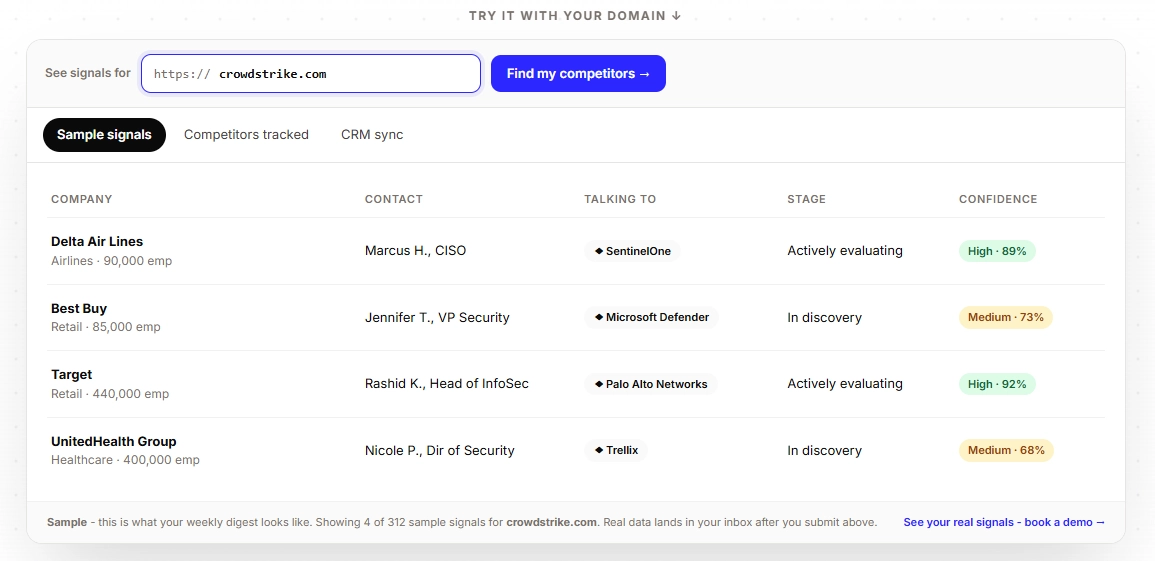
Find out with confidence if your prospects and customers are evaluating competitors
The Bottom Line
Reducing your churn rate isn't just an onboarding and engagement problem anymore, not at the speed competitors ship features and reach your customers today.
- Health scores and usage metrics still matter, but they only see what happens inside your product.
- The riskiest churn often starts entirely outside it, in a conversation you're not part of.
- If you're in a competitive category, this is already happening somewhere in your book of business.
Subscribe to newsletter
No-BS GTM strategies to build more pipeline in your inbox every week
Related Reading
Some other posts you might find helpful