Competitor Monitoring: Knowing Who's Talking to Competitors

What if I told you that you could actually see who your competitors were in active deals with?
It's something your current competitor monitoring tools can't do.
That gap exists because competitor monitoring isn't one category. It's four or five different subcategories of tracking. Worth separating them before picking a tool, because the tool that solves one does nothing for the others.
Four Categories of Competitor Monitoring and Tools
1. Price monitoring
If you're watching how a competitor prices, discounts, or bundles, tools like Prisync or Price2Spy can parse pricing pages on a schedule and flag any changes.
This matters most in ecommerce and any market with public list pricing.
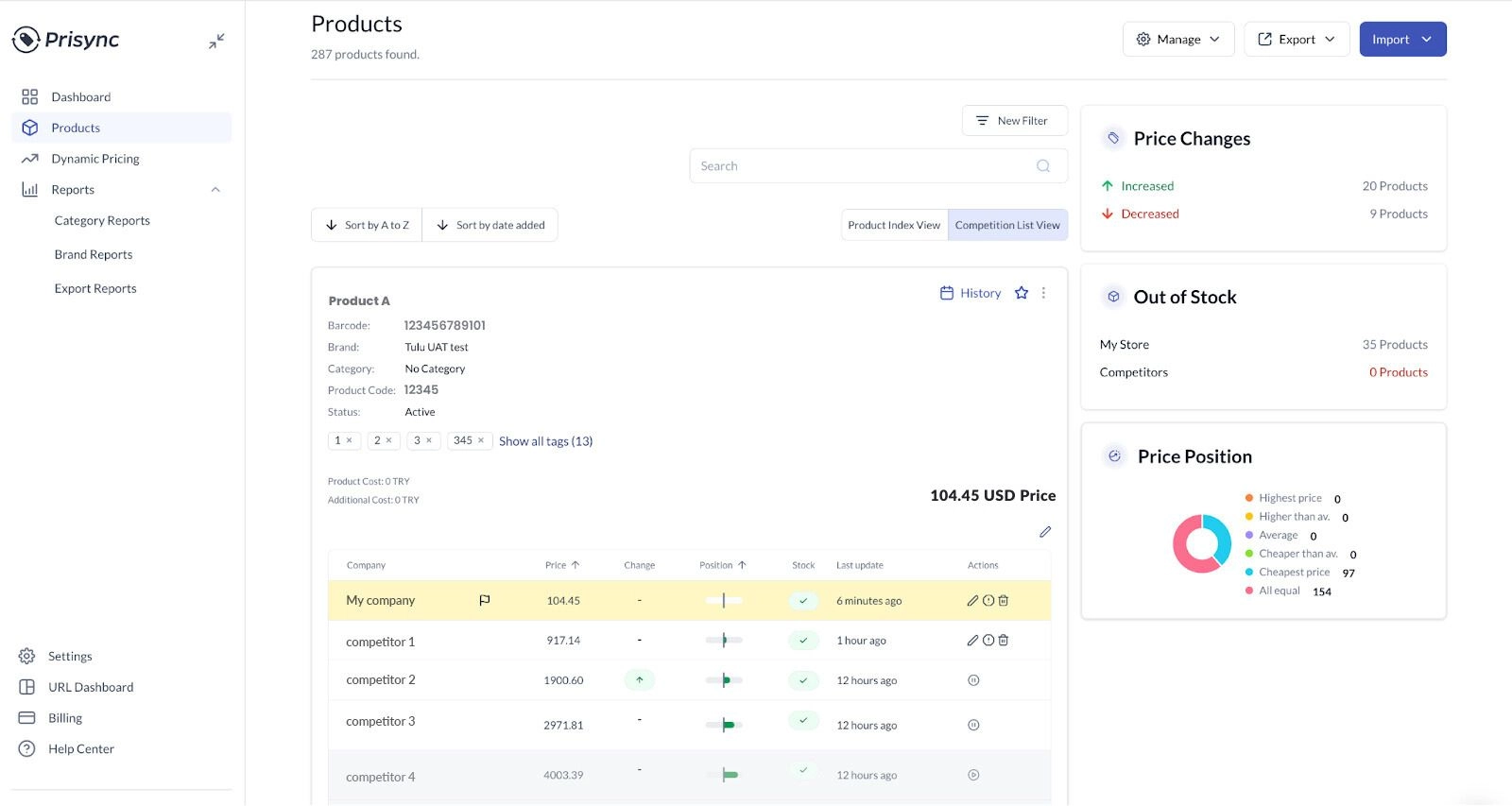
Tracking competitive pricing in Prisync
2. Website and content monitoring
Tools like Visualping or a basic Google Alert catch when a competitor publishes new content, changes messaging, or updates a landing page.
This is useful for competitive positioning and content gaps.
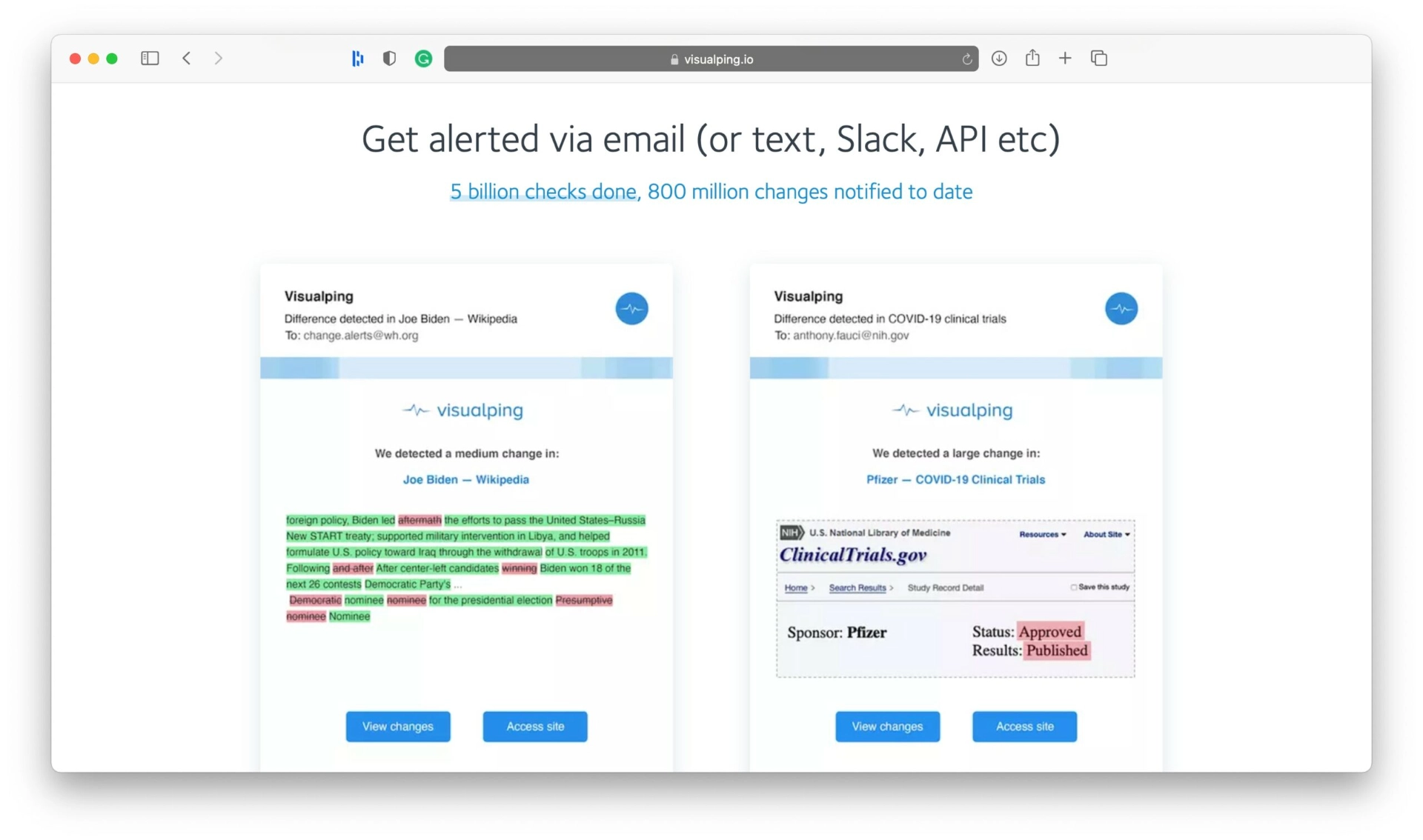
Use Visualping to see when a competitor publishes online
Also passive: you find out a competitor shifted their message after it's already live, not while a specific buyer is reading it.
3. Email monitoring
Signing up for a competitor's newsletter, or using something like MailCharts, shows you their campaigns, offers, and cadence. Good for understanding their marketing motion.
It's still marketing, not sales, so it won't show you which specific accounts are in an active buying process.
4. Social monitoring
Tools like Mention, Brand24, or Sprout Social track when a competitor's brand name comes up in posts, comments, or news on socials.
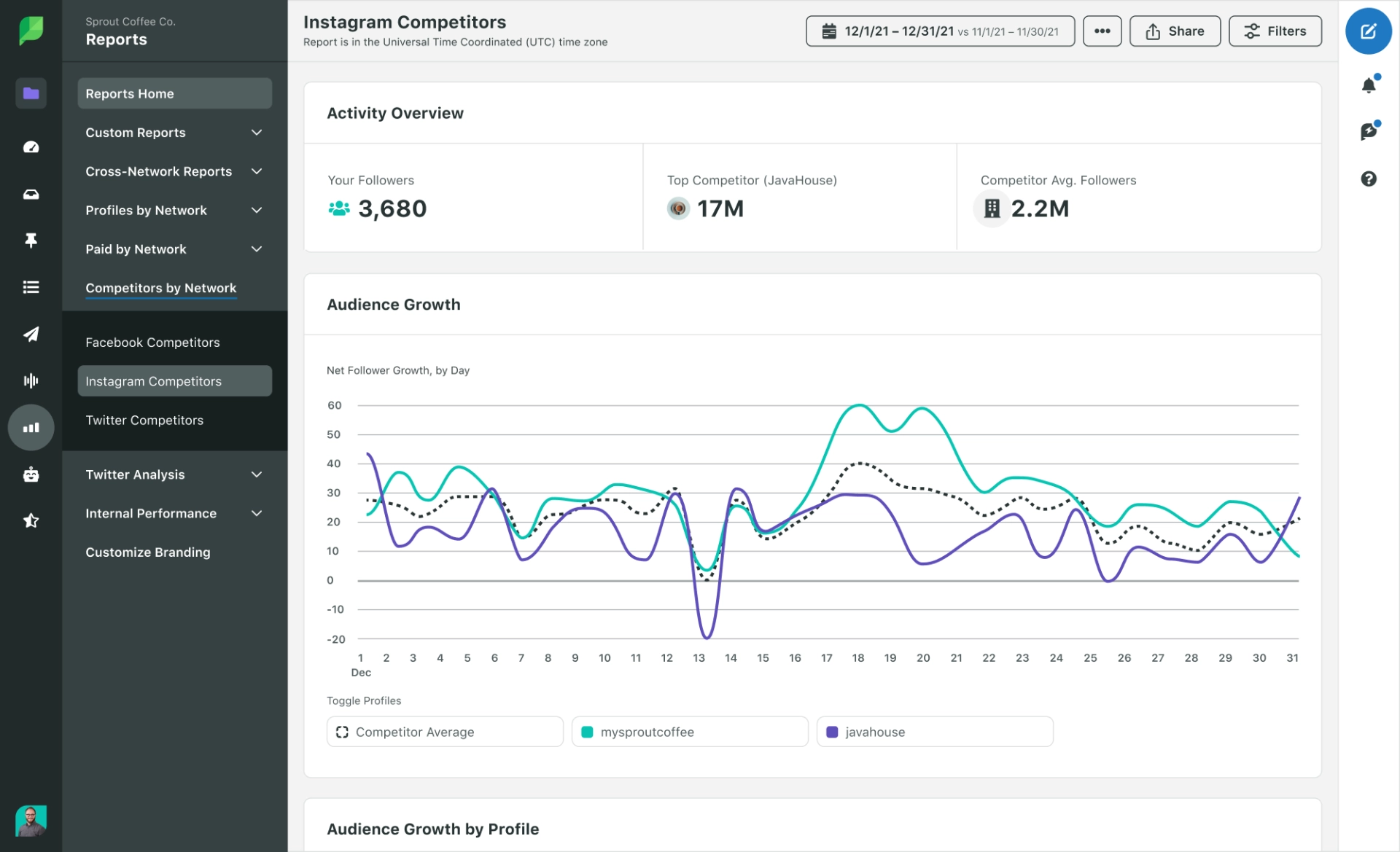
Analysis of competitor social signals in Sprout Social
This is where most teams end up doing competitor monitoring by hand today, checking a competitor's company page, scrolling their team's posts, watching for anything that looks like customer activity.
It works, technically. It's also slow, manual, and built for brand mentions, not for spotting an actual buying committee as it forms.
These signals are actually weak for monitoring competitors
All four categories above monitor the competitor's output. What they don't cover is the competitor's sales motion, specifically, which accounts their reps are actively engaging with, and whether that engagement looks like a real evaluation instead of a cold outreach attempt.
That signal exists and it's watchable. When a competitor's sales rep starts interacting online with people at a target account, and especially when more than one person from that same account is interacting with the same rep in a short window, that's not brand awareness. That's a buying committee forming.
Automated Competitor Monitoring for Seeing Active Evals
Yes, this is totally possible.
We let you see which of your target accounts are actively engaging with a competitor's sales team online and across the web, surfaced automatically instead of checked by hand.
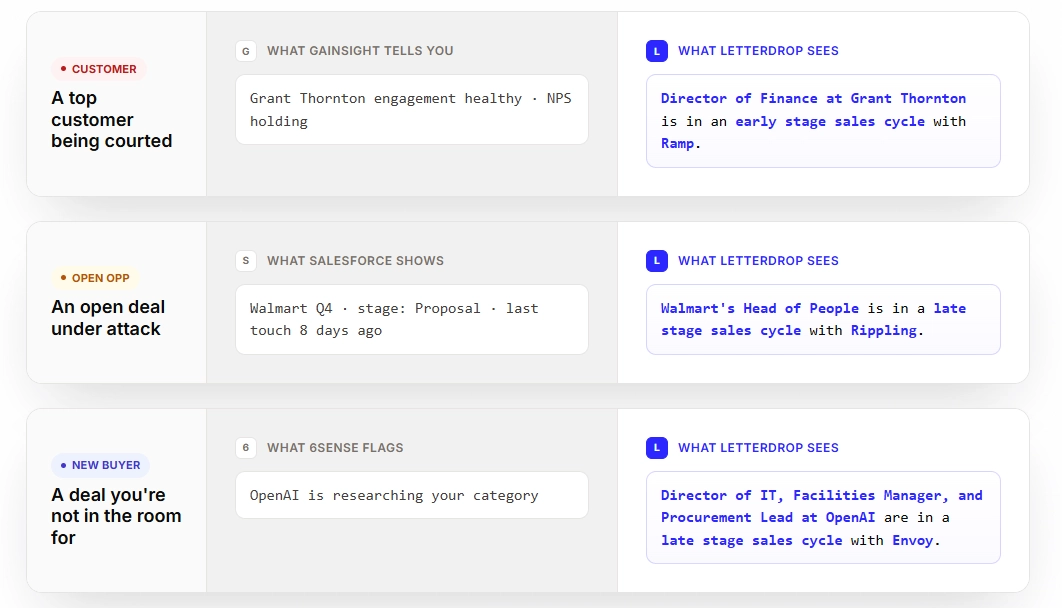
How Letterdrop lets you monitor competitor deals
The numbers, validated against four competitor CRMs over seven weeks:
- 1 in 4 high-priority accounts had a live deal already open with a competitor
- 1 in 7 across the full list, before any prioritization, still well above the 3 to 5 percent a cold list typically converts at
- About 38 percent of a competitor's pipeline dollars are discoverable this way, skewing toward the bigger deals
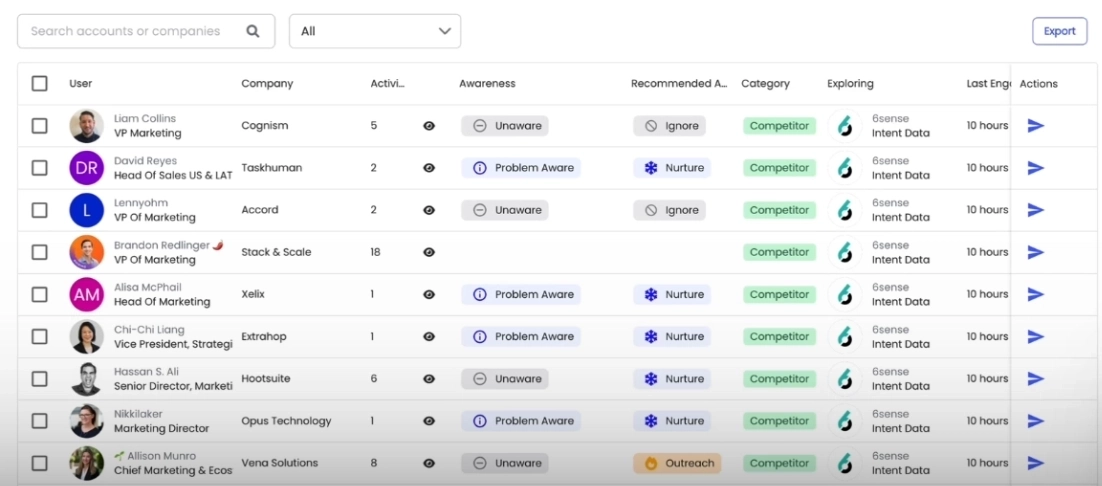
You can see who your competitors are talking to
If you're already running price, content, or social monitoring and still finding out about competitive deals after they're lost, you're not seeing actual deals in motions.
Start by picking one competitor and watching their sales team's activity for two weeks, by hand or automated. The accounts that show up more than once are the ones worth a conversation before the deal is already decided.
Subscribe to newsletter
No-BS GTM strategies to build more pipeline in your inbox every week
Related Reading
Some other posts you might find helpful