How to Sell Against a Competitor That Got There First

Losing a deal to a competitor who got there first is frustrating. Not because you lost on merit. Because you never had a fair shot.
The other vendor ran discovery, shaped the evaluation criteria, and built a relationship with the champion before you knew the deal existed. By the time you showed up, the prospect was not evaluating options. They were validating a decision they had already started making.
We see this all the time. Here's how to deal with it.
Why Getting There Second Compounds Against You
The first vendor into an evaluation does not just get more time with the buyer. They get to define the problem.
The questions they ask, the use cases they emphasize, the success metrics they propose all shape how the prospect thinks about what they need. By the time you arrive, you are being evaluated against a framework someone else built.
The answer is not to become a better late-stage closer. The answer is to stop arriving late.
Stop Arriving Late
Most teams find out about a competitive evaluation three ways. The prospect tells them directly. A mutual contact mentions it. Or it shows up as a loss in the CRM after the fact.
All three are too late.
The signal that a buying cycle has opened exists well before the prospect picks up the phone.
When a competitor's rep begins publicly engaging with decision-makers at a target account, a deal is forming.
When two or more people at the same company appear in a competitor rep's orbit or social feed within 14 days, the probability of an active buying cycle is 84%.
That is your window. While the evaluation criteria are still being formed and the prospect has not yet developed a preference.
We can help you detect those signals and route them directly to reps, so they can intercept these folks ASAP.
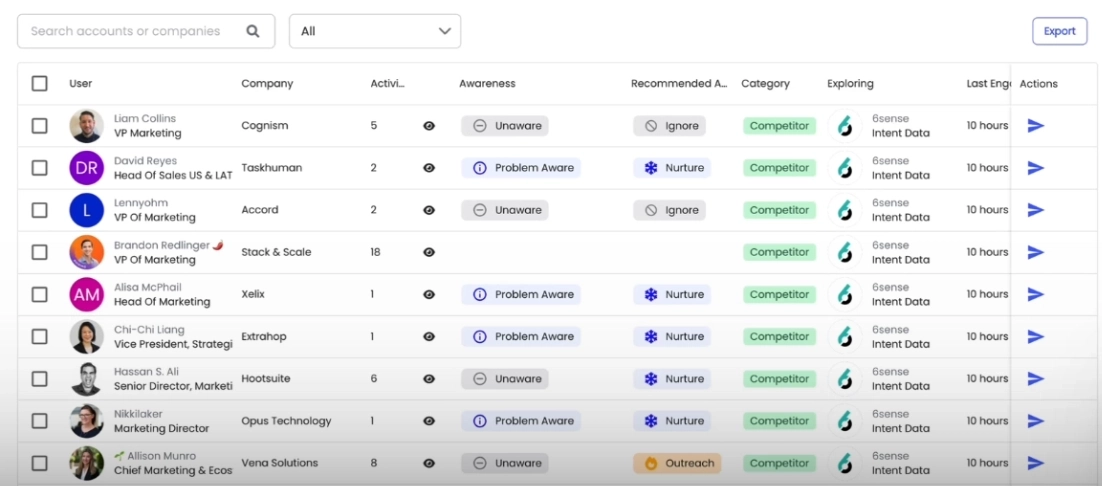
Helping intercept competitor deals in Letterdrop
How to Tell You Are Second To a Deal
- The prospect already has a vocabulary for the problem. If a discovery call opens with specific terminology, comparison frameworks, or evaluation criteria that sound oddly formed for a first conversation, someone got there before you. People do not invent structured evaluation criteria on their own. They absorb it from whoever talked to them first.
- They answer questions faster than they should. A prospect encountering a problem space for the first time hesitates, asks clarifying questions, thinks out loud. A prospect who has already been through a competitor's discovery process answers cleanly, because they have answered these questions before.
- The timeline feels compressed. "We need to decide by end of month" from a company that only just started talking to you is a signal, not a scheduling detail. Deadlines that arrive fully formed usually came from somewhere else.
- They mention a feature or workflow you have not brought up. If a prospect asks whether you support something oddly specific, something that was not in your pitch, they are pattern-matching against a demo they already saw.
- Multiple people at the account are already aligned. When you get access to a buying committee and find they already have shared opinions, already agree on priorities, someone has done the work of aligning them. That is not usually the prospect doing it alone.
To confirm it, ask directly, without accusing:
- "What have you already looked at for this?"
- "What's stood out so far, good or bad?"
- "Is there anything that's given you pause with other options?"
- "What does the ideal solution look like, based on what you've seen?"
None of these require the prospect to admit anything. But the answers tell you immediately whether you are the first conversation or the third, and which of the tactics below you actually need.
What to Do When You Are Already Behind
Sometimes you find out late regardless. Here is how to compete from that position.
- Reframe the evaluation criteria. Ask the prospect directly what they have been shown, what they liked, and what gave them pause.
You are listening for what the other vendor did not cover. Every competitor has weaknesses they are trained to minimize. Surface them through questions rather than statements. "Did they walk you through how that works at your scale?" lands better than "their pricing breaks down at scale." The prospect discovers the problem themselves.
- Go wider in the account (multithread). The competitor got to the champion first. That does not mean they have the whole account.
Identify stakeholders who will be affected by the decision but have not been through the competitor's discovery process. End users. Finance. IT. These contacts have not been framed yet. Getting one of them on your side creates internal friction around the competitor's deal.
- Use differentiation precisely. Generic claims do not work in late-stage competitive deals. What works is specific, evidence-backed contrast tied to what the prospect told you matters. Not "we have better integrations." "Here is a customer in your exact situation and how they connected it in under a day."
When the Competitor Already Has the Contract
Sometimes the account is already locked in. Not looking to switch. At least not today.
This is a timing problem, not a dead end.
- Monitor for the closed-lost or renewal window. When a renewal approaches, the account re-enters evaluation mode. The status quo gets questioned. Dissatisfaction that was tolerated becomes a reason to look around. The accounts locked in today are your highest-priority pipeline for twelve to eighteen months from now.
Letterdrop monitors closed-lost accounts for conditions that make re-engagement credible: renewal windows approaching, leadership changes, public signals of dissatisfaction.
It then queues up outreach for you.
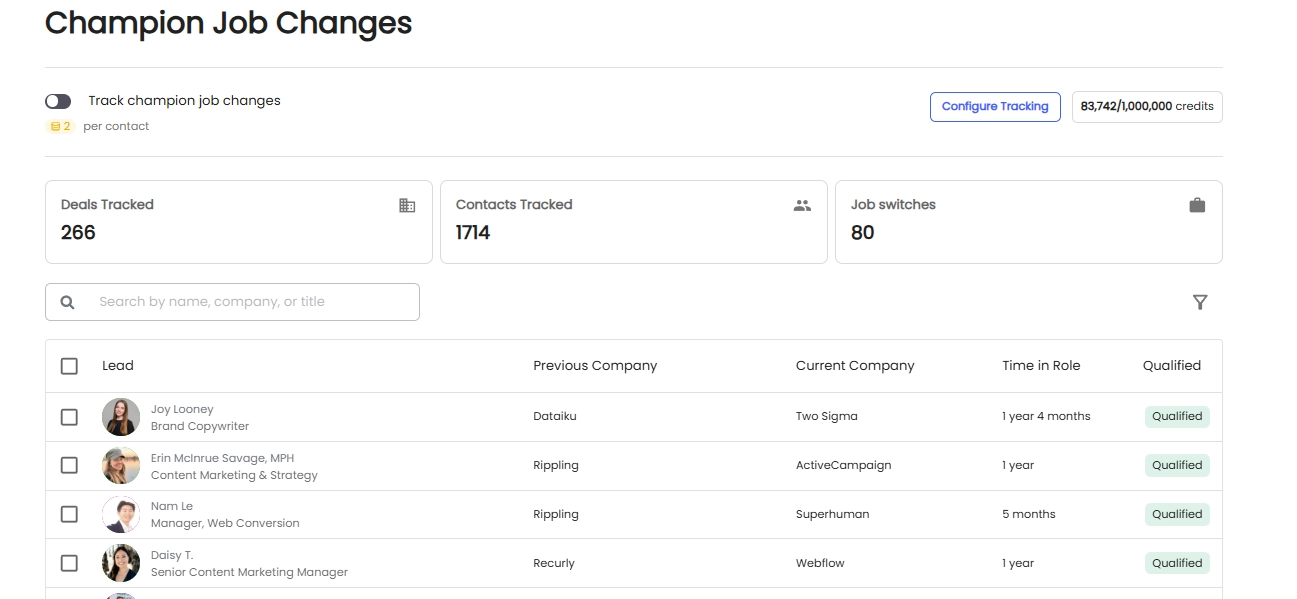
- Watch for champion job changes. The competitor's strongest asset in a locked account is the champion who bought the product. When that person leaves, the account is vulnerable. A new leader rarely feels ownership over their predecessor's vendor decisions. They are open to conversations that would have gone nowhere six months earlier.
Letterdrop monitors target accounts for leadership changes continuously. When a new decision-maker lands at an account your competitor owns, it surfaces as an outreach opportunity before the new hire has settled into the status quo.
The Bottom Line
Winning competitive deals requires operating on two timelines at once.
The short timeline: reframe criteria, go wide in the account, use differentiation precisely. Deploy these in every competitive deal you already know about.
The long timeline: find evaluations before they are declared, monitor locked accounts for the moment they open up. Most teams invest in the short timeline and almost nothing in the long one. That is why they keep arriving late.
Build infrastructure around the long timeline and the ratio of deals you find out about early versus late shifts in your favor. That ratio, over time, is what moves your win rate.
Subscribe to newsletter
No-BS GTM strategies to build more pipeline in your inbox every week
Related Reading
Some other posts you might find helpful