Competitor Talk Tracks for Sales

When a prospect mentions they're also talking to a competitor, most reps either go on the defensive or freeze. Neither helps. This is a set of talk tracks for the specific moments that come up in competitive deals - what to say, and why it works.
1. When You First Find Out a Competitor Is Involved
The right instinct here is the opposite of what most reps feel. A buyer evaluating multiple vendors is a buyer who intends to spend money. When someone is only talking to you, you have no real signal of how serious they are. Competition confirms a purchase decision is happening.
Use that framing to open, not close:
"Honestly, the fact that you're running a proper evaluation is useful context for us. Our goal is to make sure you have everything you need to make the right call - whether that ends up being us or not."
This does two things: it signals confidence, and it positions you as a consultant rather than a vendor fighting for the deal.
2. when They Ask How You Compare to a Competitor
The worst response is a feature-by-feature breakdown. It anchors the conversation in a comparison you do not control and invites the buyer to score you against criteria someone else set.
The better move is to reframe around fit:
"[Competitor] is a strong product - they're particularly well-suited for [use case or segment]. Where we consistently win is [your specific strength]. The question worth answering is which of those actually maps to what you're trying to do."
This works because it signals market knowledge, avoids attacking anyone, and moves the conversation toward fit rather than a head-to-head you're claiming to win on principle.
When They Push Back on Price
Don't defend the number. Change what's being compared:
"What I'd want to walk you through is what you're actually getting at each price point because they're genuinely different bets on what matters. Can I show you the specific difference?"
Then be concrete about it. Generic value claims don't land here. The contrast needs to be specific to what they told you they care about in discovery.
If volume versus quality is the trade-off. Here is an example for our own use case:
"We give you fewer signals than [competitor]. That's intentional. What we surface are contacts actively in conversations with your competitors right now - which is a different category of signal than someone reading an article about your industry."
When They Say the Competitor Got There First
Getting in second is recoverable. The frame to use:
"They may have had more time with you, but I'd rather spend our time making sure you're comparing the right things than playing catch-up on their agenda. What has the evaluation looked like so far?"
Then listen for what hasn't been covered and fill that gap. Every competitor has blind spots they're trained to minimize. Surface them through questions, not statements.
When You Need Your Champion to Sell Internally
Most reps wait to be asked for assets. In a competitive deal, send them before they ask:
"Here's a one-pager for your finance lead framed around what you told me matters most. I've also written up the three questions your leadership will probably ask and the answers they'll want. Let me know if it would help to have me on an internal call."
The rep on the other side probably isn't doing this. Making it easier for your champion to say yes internally is one of the clearest competitive advantages available in a deal, and most reps leave it on the table.
When the Deal Looks Like It's Going the Other Way
Don't chase with a discount. Clarify the criteria first:
"Before we get to numbers, help me understand - what would need to be true for this to be an easy decision? I want to make sure we're solving for the right thing."
If the answer reveals a genuine fit problem, say so. Reps who are honest about fit are the ones buyers come back to and refer. That's worth more than a discounted close on a deal that churns.
How to Find Competitive Deals Before It's Too Late
The talk tracks above assume you know you're in a competitive situation. The harder problem is the deal you never find out about - a competitor's rep engaged with a target account, ran a cycle, and signed the contract before you were aware.
The signal that a buying cycle is opening exists before a prospect picks up the phone. Getting in at that moment - before the frame is set and before the champion has developed a preference - is what makes every one of these talk tracks easier to use.
We can do that for you at Letterdrop, sending your reps signals that prospects are interacting with competitors across the web.
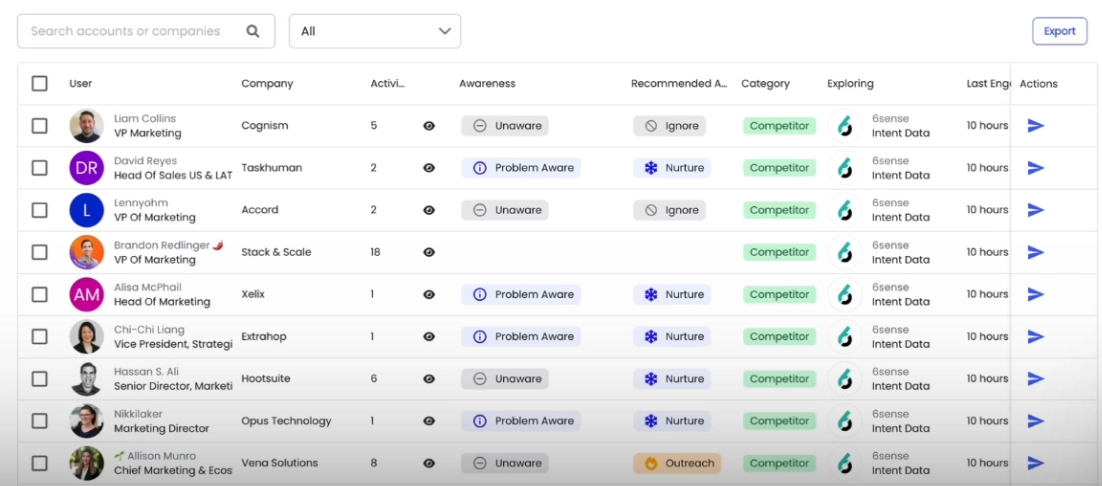
Know who your competitors are talking to
Subscribe to newsletter
No-BS GTM strategies to build more pipeline in your inbox every week
Related Reading
Some other posts you might find helpful