Competitor Analysis Framework for Sales Teams

Most competitor analysis frameworks are built for marketing or product teams, positioning matrices, brand perception studies, content gap analyses. Not what a sales team needs to win the deal they're working right now.
Sales teams need answers to different questions: "What do they say on the demo that makes prospects choose them?" and "Where are they weak and how do I exploit that in discovery?"
This framework is designed for sales: what to assess, how to structure it, and how to turn it into battle cards your reps will actually use.
The Four-Layer Sales Competitor Analysis
Layer 1: Product and Feature Comparison
Build a feature grid for each major competitor. For every feature, document:
- Do they have it? Yes, no, partial, or in beta.
- How does it compare? They might have it, but the UX is clunky or the setup is painful.
- What do users say? Pull from G2/Capterra reviews — real user language beats your marketing claims.
Only include features that come up in your sales process. If prospects never ask about it, it doesn't belong on the battle card.
Layer 2: Positioning and Messaging
Analyze their public messaging:
- Homepage/product pages: What pain points do they lead with? Who are they speaking to?
- Case studies: What customer types do they highlight? What outcomes do they claim?
- Pricing page: How do they package? Public or gated pricing?
- Demo experience: If possible, get a trial. Note the narrative, objections they pre-handle, and value props they push.
What you're looking for: gaps between messaging and reality. "Enterprise-ready" but reviews mention implementation nightmares? That's an opening.
Layer 3: Win/Loss Intelligence
The layer most frameworks skip — and the most valuable for sales.
From your CRM: Filter closed-won and closed-lost deals tagged to this competitor. Look for:
- At what stage do you lose to them?
- What loss reasons are most common?
- Are there deal sizes or personas where they consistently win?
- Is your win rate trending up or down?
If you're not tagging competitors in your CRM, start there. Our guide on competitor tracking in Salesforce (https://letterdrop.com/blog/competitor-tracking-salesforce) covers setup.
From call transcripts: Search for competitor mentions. What claims are prospects relaying from their demos? What features are they comparing?
Output: a "how we win / how we lose" summary per competitor.
Layer 4: Strategic Assessment
Quarterly, not weekly. Where is this competitor headed?
- Hiring: Surge in enterprise AEs = moving upmarket. Vertical-specific hires = industry play.
- Funding/financials: New funding = aggressive spend incoming. Layoffs = pulling back.
- Product signals: Changelogs, beta features, engineering job posts hint at what they're building.
- Partnerships: New integrations signal who they're targeting.
Output: a 1-page strategic brief per competitor, shared with sales and product leadership quarterly.
Turning Analysis Into Battle Cards
A good battle card is one page max and answers five questions:
- Who are they? One-line summary.
- Where do we win? 3-4 areas with specific proof points.
- Where do they win? Be honest — give reps a way to reframe.
- Common objections and responses. The 3-5 things prospects say after talking to them.
- Landmine questions. Discovery questions that expose weaknesses without naming the competitor.
If a rep can't find what they need in 60 seconds, the card is too long. Update monthly or when something material changes.
The "Landmine" Technique
The highest-leverage output of competitive analysis isn't a feature table — it's discovery questions that subtly expose competitor weaknesses.
If you know a competitor has slow implementation, your rep asks: "How important is time-to-value? What would it cost if implementation took 3 months instead of 3 weeks?"
The prospect now has a benchmark. When the competitor quotes a 3-month timeline, the pain lands without your rep naming anyone. Build 3-5 landmine questions per competitor and practice them in training.
Keeping It Current
- Monthly: Update feature comparisons and battle cards.
- Quarterly: Run the full four-layer analysis. Present to sales and product.
- Real-time: Reps drop new intel into a Slack channel or CRM field immediately.
Assign a single owner - product marketing or sales enablement. If nobody owns it, it goes stale within a quarter.
For the monitoring cadence that feeds this framework, see our guide on monitoring competitors in B2B sales.
Connecting Competitive Analysis to Pipeline Recovery
Good competitive analysis doesn't just help you win active deals. It helps you recover lost ones.
The problem is doing this manually at scale. You'd need to cross-reference competitor news against every tagged deal, check contract timelines, and route the right follow-up to the right rep.
Letterdrop automates this.
Letterdrop pulls competitive context from your CRM deal data, call transcripts, and stakeholder history. It then lines up outreach for you.
Here's how it works:
- Tell us which competitors matter in active deals
- We track buyer activity tied to those competitors that correlates with live sales cycles
- Contacts are enriched and delivered to your CRM or Slack with context and suggested outreach
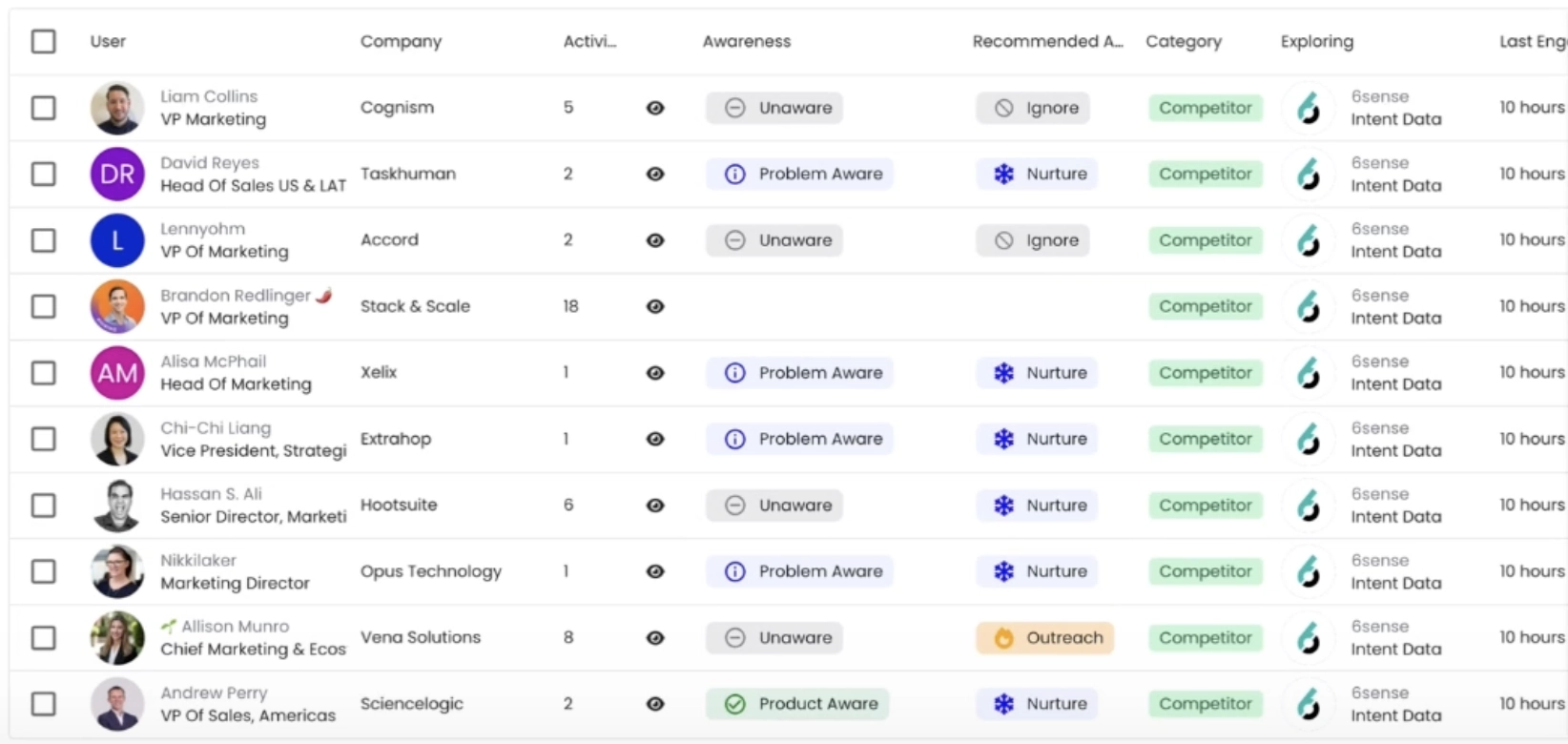
Competitor monitoring is automatic in Letterdrop
Subscribe to newsletter
No-BS GTM strategies to build more pipeline in your inbox every week
Related Reading
Some other posts you might find helpful